
Ask any parent who sends their child to a residential school what changed first and most won’t say “grades.” They’ll say something like — my kid started doing things without being told or she just seems more sure of herself now. That’s really the heart of what boarding education does and it’s worth unpacking properly instead of just repeating the usual builds character line you see everywhere.
Residential schools in India shape independent students by placing them in a structured, supervised environment where they manage their own routines, decisions and responsibilities daily — without a parent stepping in at every turn. Over time, this builds self-discipline, problem-solving ability and genuine confidence that day-schooling, however good, rarely replicates in the same way.
That’s the short version. But independence isn’t built through one big moment — it comes from dozens of small, repeated situations a child faces every single day at a boarding school. Let’s actually walk through how that happens.
What Makes Residential Schools Different in the First Place
A day school student goes home every evening to a routine someone else largely manages — meals are cooked, laundry appears clean and homework reminders come from a parent hovering nearby. That’s not a criticism; it’s just how day schooling naturally works.
Residential schools flip that setup entirely. The child is now responsible for:
- Waking up on time without a parent calling out from another room
- Managing their own study schedule between classes, sports and prep hours
- Sorting out disagreements with roommates or classmates on their own
- Handling small emergencies — a lost item, a mix-up in the timetable, a minor illness — without immediately calling home
None of these sound dramatic individually. But add them up over a full academic year and you get a student who’s simply used to figuring things out.
The Real Benefits of Residential Schools
People throw around the phrase “benefits of residential schools” a lot, often without getting specific. So here’s what actually shows up in students over time, based on what most boarding schools consistently observe.
Stronger decision-making under normal, everyday pressure
Kids in a boarding environment make dozens of small decisions daily — what to prioritise before a deadline, how to manage limited free time, when to ask a teacher for help versus figuring it out themselves. That kind of repeated practice is hard to recreate at home.
Genuine peer-based social skills
Living with the same group of peers, day in and day out, teaches negotiation, patience and empathy in a way that a few hours of school interaction simply can’t. Roommates don’t always get along instantly — and learning to navigate that is its own quiet life lesson.
A structured yet flexible routine
Boarding schools typically run a tight daily schedule — classes, sports, prep time, meals — but within that structure, students still get to choose their electives, clubs and how they use their free hour. That mix of structure with pockets of freedom is actually where independence grows fastest, since it’s neither total chaos nor total control.
Resilience that comes from missing home occasionally
This one’s less talked about but it’s real. Almost every boarder feels homesick at some point, especially early on. Working through that feeling — rather than avoiding it by going home every weekend — builds emotional resilience that stays with a child well beyond school. We’ve actually gone into this in more depth in our piece on how boarding schools support students’ mental health and wellbeing which is a useful read if this is a concern for your family.
Exposure to diverse backgrounds and perspectives
This one’s less talked about but it’s real. Almost every boarder feels homesick at some point, especially early on. Working through that feeling — rather than avoiding it by going home every weekend — builds emotional resilience that stays with a child well beyond school. We’ve actually gone into this in more depth in our piece on how boarding schools support students’ mental health and wellbeing which is a useful read if this is a concern for your family.
Boarding School Benefits That Go Beyond Academics
It’s easy to assume boarding schools are just about discipline and independence but there’s an academic angle worth mentioning too. With prep time built into the daily schedule and teachers often living on campus, students get more structured academic support outside regular class hours than most day-school students do. Doubt-clearing happens the same evening, not three days later over a WhatsApp message to a tutor.
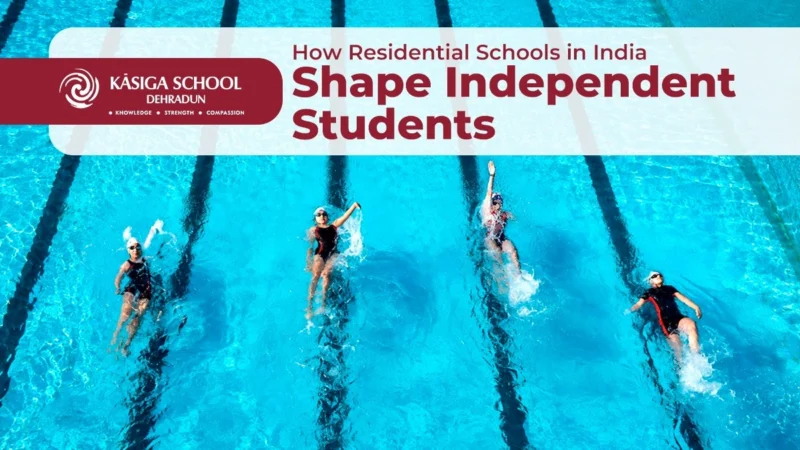
There’s also the sports and co-curricular side. Boarding schools tend to have the infrastructure — grounds, courts, pools — and more importantly, the time in the daily schedule to actually use them consistently, rather than squeezing in one PE period a week. If you’re weighing options in this region, we’ve compared several in our post on top boarding schools in Uttarakhand with hostel facilities which breaks down what different schools offer on this front.
Is Every Child Ready for a Residential School?
Honestly, no — and any school that tells you otherwise probably isn’t being straight with you. Some kids adapt to boarding life within a few weeks; others need more time and a few genuinely do better in a day-school setup, at least for a few more years.
A few signs that suggest a child might be ready:
- They can follow a routine with minimal reminders already
- They’ve shown some comfort being away from parents for short stretches — a summer camp, a relative’s place, a school trip
- They’re curious about trying new things rather than anxious about every change
If you’re unsure where your child stands on this, we’ve laid out more specific indicators in our blog on the signs your child is ready for boarding school — worth a look before making the call either way.
What Parents Should Actually Look For
Not every residential school delivers on the independence-building promise equally well. A few things worth checking before choosing one:
- How much unstructured free time students genuinely get, versus a schedule that’s regimented down to the minute
- Whether pastoral staff are approachable and present, not just listed in a brochure
- How the school handles homesickness and early adjustment struggles in the first term
- Whether the curriculum and board (CBSE, ICSE or Cambridge/IGCSE) actually suits your child’s long-term academic path
Conclusion
Residential schools in India build independent students not through one dramatic change but through the steady accumulation of small daily responsibilities — waking up on their own, managing time, sorting out disagreements, sitting with homesickness instead of running from it. That’s really what the benefits of residential schools come down to when you strip away the marketing language.
Kāsiga School fits into this picture in a fairly direct way. Set on a Himalayan campus near Dehradun, away from the noise and constant supervision of city life, it gives students the kind of space where independence has room to actually develop, while still keeping a strong pastoral care system, health facilities and experienced staff close at hand for when they’re needed. With both CBSE and CAIE (Cambridge) curricula on offer, families aren’t boxed into one academic direction too early and the school’s sports and co-curricular infrastructure means that growth outside the classroom gets just as much attention as what happens inside it. For parents weighing residential schools in India and wondering whether the boarding school benefits are worth the adjustment period, Kāsiga is a genuinely solid place to start looking.