
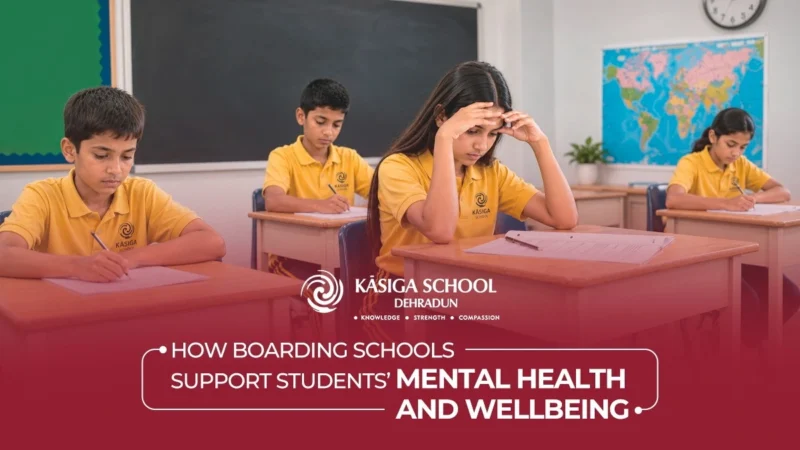
Good boarding schools support mental health through a mix of structured routine, trained counsellors who are available on campus, house parents who know each child personally and a community that keeps students socially engaged instead of isolated. It’s less about one big programme and more about a lot of small, consistent things working together every single day.
There’s a common assumption that sending a child away to boarding school might be hard on their emotional wellbeing. It’s a fair worry and honestly, a few decades ago, that concern held more weight than it does today. Boarding schools have changed. Mental health in boarding schools is no longer treated as an afterthought tucked away in a policy document; it’s built into daily campus life through counselling, pastoral care and the relationships students build with the adults around them. Let’s look at how this actually plays out.
Why Boarding School Mental Health Support Looks Different Today
Older boarding school models leaned heavily on discipline and routine, sometimes at the cost of emotional support. Today, most well-run residential schools understand that a child away from home needs more than rules and a timetable. They need someone to talk to, a sense of belonging and an environment that notices when something feels off.
This shift shows up in a few concrete ways:
- Dedicated school counsellors who are part of the daily campus structure, not an occasional outside visitor
- House parents and wardens trained to notice early signs of homesickness, stress or withdrawal
- Peer support systems, clubs and group activities that keep students socially connected
- Open-door policies where a student can walk in and talk without needing a scheduled appointment
- Regular check-ins built into the boarding routine rather than only happening during a crisis
The Role of Boarding School Counselling
Boarding school counselling works differently from how most people imagine therapy. It’s rarely a formal, clinical setup. In most residential schools, it looks more like a trusted adult sitting down with a student, listening without judgement and helping them work through whatever’s bothering them, whether that’s missing home, struggling with a friendship or feeling overwhelmed before exams.
At its best, this kind of counselling does a few specific things for a student:
- Gives them a safe space to talk about their feelings without fear of it going back to their parents or classmates
- Helps them build coping strategies for handling change especially in the first few months of boarding life
- Offers guidance on everyday things like study stress, peer relationships and adjusting to a new routine
- Steps in early when a student is dealing with something heavier like grief, anxiety or a difficult transition
The key word here is consistency. One conversation doesn’t fix everything but a student knowing that support is always available, every single day, makes a real difference over time.
What Good Student Wellbeing in Boarding Schools Actually Involves
Student wellbeing in boarding schools isn’t just about having a counsellor’s office somewhere on campus. It’s a much broader picture that includes physical health, daily structure and a sense of community. A school genuinely invested in this usually covers:
- Health facilities on campus so minor illnesses or emotional dips don’t turn into bigger problems from being ignored
- A structured daily routine, which, somewhat counterintuitively, tends to reduce anxiety because students know what to expect from their day
- Nutritious, well-planned meals since diet has a genuine, well-documented impact on mood and energy
- A multicultural, socially active environment where students build friendships across backgrounds instead of feeling isolated
- Physical activity and sport which help release stress in a healthy, natural way
None of these elements works in isolation. A child who’s eating well, sleeping on a routine, staying active and has someone to talk to when things get hard is simply in a stronger position, emotionally, than one without any of that structure.
What Parents Should Actually Look For
If you’re a parent evaluating a boarding school with your child’s emotional wellbeing in mind, a few questions are worth asking directly:
- Is there a full-time, on-campus counsellor or does the school only bring one in occasionally?
- How are house parents trained to identify a student who’s struggling?
- What does the school actually do when a student is homesick or anxious, beyond just “give it time”?
- Is there a structured pastoral care programme or is emotional support handled reactively?
Schools that can answer these clearly with actual examples rather than vague reassurances are usually the ones genuinely built around student wellbeing rather than just marketing the idea of it.
Conclusion
Mental health in boarding schools has come a long way from being an unspoken concern to becoming a core part of how residential campuses are designed and run. Between accessible counselling, attentive house parents, structured routines and a socially engaged community, the right boarding school can actually support a child’s emotional growth just as much as their academics.
Kāsiga School in Dehradun builds its entire boarding programme around this idea. Counselling here isn’t an occasional service; it’s a regular, on-campus presence where students can speak freely about what they’re going through, whether that’s homesickness, stress or something more personal, without fear of judgement. This sits within a wider pastoral care structure that focuses on a student’s emotional, social and physical wellbeing, alongside health facilities on campus, meals planned with a qualified nutritionist and a multicultural community where students from different parts of India and abroad build genuine friendships.
It’s this combination of consistent emotional support and everyday structure that has helped Kāsiga be recognised among the best boarding schools in Dehradun and it’s exactly the kind of foundation that helps a child settle into boarding life with confidence rather than anxiety.
Also Read: Benefits of Residential School Education for Your Child