
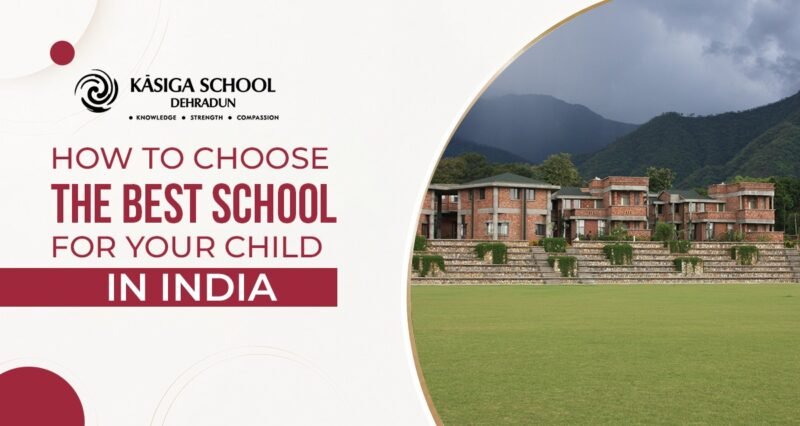
Picking a school for your kid honestly feels like one of those decisions where you second-guess yourself at every step. Boards, fees, location, holistic development—every prospectus says the same things and it’s hard to tell what actually matters once your child is sitting in that classroom every day. So let’s cut through some of that.
The best school for your child in India is one that matches your child’s learning pace, offers a board (CBSE, ICSE or IGCSE/Cambridge) suited to their long-term goals, has qualified and approachable teachers, safe infrastructure and a genuine focus on both academics and extracurriculars — not just exam results.
That’s the short version. Now let’s actually unpack it, because “safe infrastructure” and “genuine focus on academics” mean different things depending on who you ask and a lot of parents in Dehradun, Uttarakhand and across India end up confused precisely because every school claims to tick every box.
Why This Decision Matters More Than It Seems
A school isn’t just where your child learns math and science. It’s where they’ll spend a huge chunk of their childhood, build friendships, form habits and figure out who they are outside the house. Get the fit wrong and even a bright kid can end up disengaged or anxious. Get it right and school becomes something they actually look forward to.
That said, there’s no single “perfect” school for every family. What works brilliantly for one child might not suit another at all — a quieter kid might struggle in a huge, hyper-competitive school even if it has a stellar reputation.
How to Choose a School: The Factors That Actually Matter
Here’s the thing nobody tells you upfront — most school brochures look identical. Smart classrooms, experienced faculty, world-class infrastructure. So you have to dig a little deeper than the marketing copy. You have to check
Board and Curriculum Fit
- CBSE is the most widely recognised board in India, good if you expect frequent relocation or want alignment with most entrance exams.
- ICSE tends to lean more into English and humanities depth.
- IGCSE or Cambridge (CAIE) suits families eyeing international universities or a more application-based, less rote-heavy style of learning.
None of these is objectively “better.” It genuinely comes down to what your child responds to and where you see them heading after Class 12.
Faculty Quality and Student-Teacher Ratio
A school can have gorgeous buildings and still fall short if teachers are overworked or under-qualified. Ask about the actual student-teacher ratio, not the one printed in the brochure — the real number matters more when your child needs individual attention, whether that’s academic help or just someone noticing they’re having a rough week.
Safety and Daily Wellbeing
For day schools this means transport safety, campus security and how disciplinary issues are handled. For boarding schools, it goes further — pastoral care, health facilities, food quality and how homesickness or emotional struggles are managed matter just as much as academics.
We’ve actually written in more detail about this in a dedicated piece on how boarding schools support students’ mental health and wellbeing which is worth a read if you’re weighing a residential option.
Infrastructure That's Actually Used, Not Just Displayed
Labs, libraries, sports grounds — they all look fine but ask how often students actually use them. A school with one impressive-looking science lab that’s locked most of the week isn’t doing much for your child’s education. Therefore, don’t just look at the facilities — verify whether they are genuinely accessible and regularly used by students.
Extracurriculars and Co-curricular Exposure
Sports, arts, debate, music, clubs — these aren’t “extra.” They’re often where kids discover what they’re genuinely good at, something a report card rarely reveals. A school that treats these as filler activities rather than a core part of development is missing something important.
Day School or Boarding School?
This is where a lot of parents get stuck and honestly, it depends heavily on the child’s temperament and your family’s circumstances.
Day schools work well when:
- Your child thrives with daily family routine and support
- You’re located near good schooling options already
- Your child is younger and might not be ready for independent living yet
Boarding schools tend to suit families when:
- You want your child to build independence and resilience early
- Access to strong schools locally is limited
- The child shows signs of being ready for a more structured, residential environment
Neither option is inherently superior. It’s really about reading your own child correctly.
A Quick Checklist Before You Finalise Anything
Before signing on the dotted line, it helps to actually visit the campus rather than relying only on the website or a call. A few things worth checking in person:
- Talk to current parents if you can — brochures don’t lie exactly but they definitely don’t tell you everything either
- Sit in on a class or ask to observe one, even briefly
- Check how the school handles a child who’s struggling, not just one who’s excelling
- Ask about the counseling and mentorship support available especially during board exam years
- Look at where alumni have gone — not just which colleges but whether the school seems to genuinely prepare kids for what comes next
Conclusion
Choosing the best school for your child in India really comes down to matching your family’s priorities — board, learning environment, safety and the kind of exposure your child needs — with what a school genuinely delivers, not just what it promises on paper.
Among the best schools in India, especially in Uttarakhand’s boarding school landscape, Kāsiga School stands out for exactly the reasons discussed throughout this blog. It offers a rare dual-board setup with CBSE and CAIE (Cambridge), so families aren’t locked into one academic path early on. The Himalayan campus near Dehradun gives students the calm, focused environment that’s genuinely hard to find in a crowded city school, while still maintaining serious sports infrastructure — cricket, swimming, shooting and more — alongside strong pastoral care and health facilities for boarding students.
What tends to set Kāsiga apart, though, is the balance it strikes: it doesn’t treat academics and personal growth as separate tracks. So whether your priority is board flexibility, a safe and nurturing boarding environment or simply a school that takes the whole child seriously, Kāsiga is worth a proper look when you’re deciding on the best school for your child.