
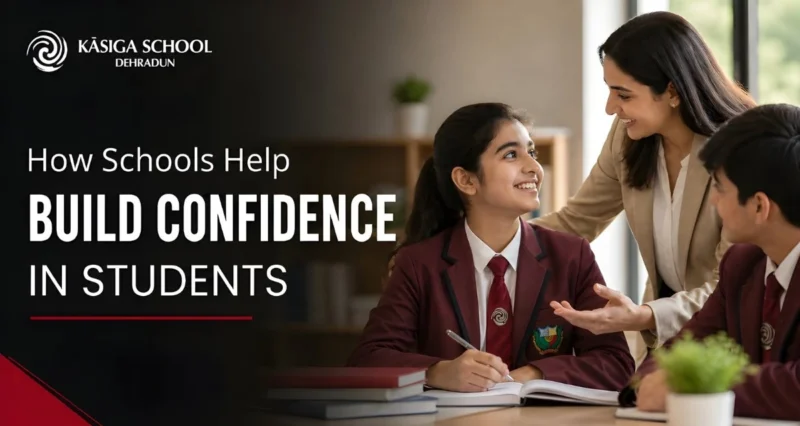
The subtle power of confidence affects everything. If a child is sure of himself, he will participate in class discussions, sign up for drama, befriend others, and recover quickly from failures. We all desire this confidence for our children. The reality, however, is that confidence does not come to children by birth but through hard work and perseverance. It develops when they are recognized, supported, and given credit. This is the environment that a top school can provide.
Now, let us examine the various ways in which schools help nurture children into confident individuals and the importance of confidence in students.
An Environment for Failure without Consequences
Fear of being wrong is among the greatest causes of children losing confidence. In many conventional contexts, being wrong feels like a source of shame. But a good school makes for something different. When teachers establish a classroom culture in which mistakes are normal and expected learning steps along the way, students are more willing to take chances. They discover that Not Knowing Is OK – they just need to be curious enough to find out. This small change in scenery can do wonders for a child’s confidence.
Teachers Who Notice and Encourage
A positive word from a teacher can impact a child for many years. When a teacher sees a student trying, compliments how far they have come, or hands them a little responsibility, it communicates something major: “You matter. You can do this.” Great teachers aren’t just good speakers. They are mentors who discover potential even when the child cannot see it in himself. This kind of encouragement fosters self-confidence.
Opportunities Outside of the Classroom
Confidence doesn’t usually come from reading books. It comes on the field, on stage, at a debate tournament, or while leading a group project. Schools that offer a broad spectrum of activities – including music, drama, sports, and community service – ensure that every youngster can find somewhere to shine. A kid who has trouble with math might find out they’re a great public speaker. And a different shy kid in class might be an excellent goalkeeper. These are powerful realizations. They make children feel like they are good at multiple things, not just the ones they get tested on.
Cooperation is the best way to learn
Teamwork teaches one thing that mark-sheets never can — to talk, cooperate, and manage differing views. When they collaborate on a project or compete with houses, they are as much encouraged to voice their ideas and listen to others. Eventually, this grows into social confidence. They get comfortable talking, negotiating, and taking the lead. It’s these kinds of skills that last them a lifetime — in college, at work, or in their relationships.
Small Wins That Add Up
You build confidence one small win at a time. Schools that celebrate progress — rather than just the highest scores — help students recognize their own growth. Maybe a student scored 10 marks more than last time. Maybe they finally cracked a problem they’d been stuck on. Maybe they spoke (in public!) for the first time. When schools celebrate these little victories, students begin to believe that effort leads to improvement. And that belief is the basis of enduring confidence.
Also Read: Tips For Students To Build Self-Confidence
The Value of Confidence in Students
Why should we care so much about that? Because confidence is everything. Confident students are more likely to get involved in class, ask questions, and get help when they need it. They are less scared of failing, which is why they go for harder tasks. They also respond more effectively to peer pressure and are more successful at making their own decisions. In other words, confidence doesn’t just make students happier at school — it prepares them for life as an adult. We cannot underestimate how important confidence is for students. It is the silent force behind success, well-being, and personal growth.
Boarding Schools: Confidence Around the Clock
Confidence-building happens around the clock for kids who go to boarding schools. They are learning to work their way through life — managing their time, caring for their personal belongings, and solving day-to-day issues — all without their parents. They live with young people from all walks of life, whom they learn to relate to and be open-minded towards. Every little thing they do, from cleaning off their desk at study time to handling a dispute with a roommate, contributes to their feeling of competence. When they graduate, they are more than just academically prepared. They’re prepared for life.
Conclusion
The importance of confidence in studentsiswell beyond their school years. It influences the adults they become, in how they approach challenges, how they treat other people, and how high they reach in life. Thus, the role of schools in building confidencehas a significant impact on developing confident, self-reliant, and responsible young people. Throughout all of this, schools promote emotional and social growth as well as academic growth, from inspiring involvement and dialogue to imparting leadership and resilience. The impact of schools on confidence is amplified if students are taught in a nurturing and supportive environment.
For parents seeking a school that serves academics alongside personality development, Kasiga School should definitely be considered. With its experienced staff and outstanding culture, Kasiga School instills both children’s confidence and the thinking skills they will need for a successful future.