
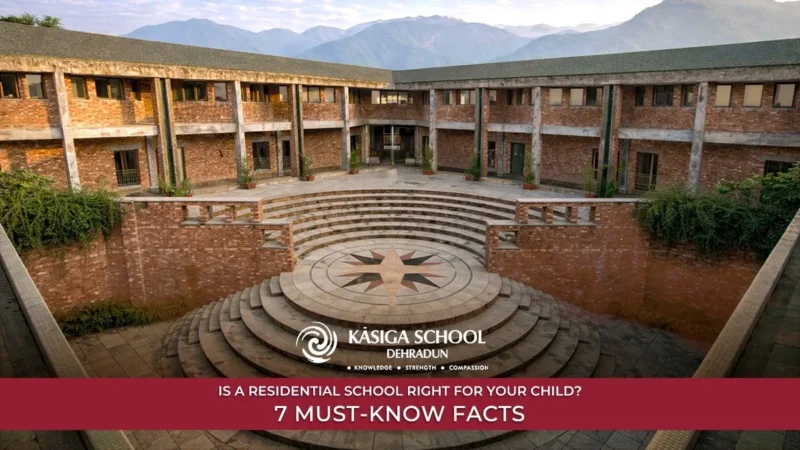
The decision to choose a residential school for your child is one of the biggest decisions that a parent can make. This decision does not mean just changing the school of your child; it means changing the whole lifestyle of your child. Naturally, this decision comes with a lot of questions, doubts and emotions.
Now, if you are one of those parents who are thinking whether a residential school in Dehradun will turn out to be the best option for your child or not, then this blog will help you clear your mind.
So without wasting much time, let’s discuss the 7 must-know facts that every parent should know before making this decision.
Fact 1: Residential Schools Build Independence Early
One of the first things that a child learns in a residential school is to become independent. Now, since they stay away from their homes, they gradually learn how to manage their routine, take care of their belongings and even make some decisions on their own.
However, this doesn’t necessarily mean that they are left to their own. Residential schools have wardens and staff who help their students at every step. But they also help their students to become more responsible and independent.
After some time, parents also realise that their child has become more confident, organised, mature and independent.
This is one of the biggest benefits of residential school education that parents appreciate today.
Fact 2: Structured Routine Improves Discipline and Focus
Residential schools follow a very structured daily routine. A typical day includes:
• Morning wake-up and exercise
• School classes
• Sports or activity time
• Supervised study hours
• Dinner and relaxation time
• Fixed bedtime
This routine instils discipline and time management skills in students. Unlike day scholars, residential students spend their whole day in a scheduled environment which is free from distractions and helps improve focus on both academics and activities.
Fact 3: Academic Support Is Often Better Than Day Schools
Many parents worry that if they are not around, their child may struggle in studies. But in reality, residential schools often provide more academic support than day schools.
Students usually get:
• Supervised prep (study) time
• Extra classes if needed
• Easy access to teachers
• Peer learning in hostels
Library and academic resources
Because of this continuous academic environment, many students show significant improvement in their performance over time.
Fact 4: Residential Schools Focus on All-Round Development
Education today is not just about marks and exams. Schools now focus on developing communication skills, leadership, creativity, physical fitness and emotional strength.
Residential schools provide time and infrastructure for:
• Sports and athletics
• Music, dance and arts
• Theatre and public speaking
• Clubs and hobby activities
• Personality development programs
Now, since students live on campus, they can participate in these activities without worrying about travel time or safety. This leads to overall personality development and not just academic growth.
Fact 5: Children Develop Strong Social and Life Skills
When children live with other students, they learn important life skills that cannot be taught in a classroom.
They learn:
• How to share space with others
• How to adjust with different personalities
• How to solve problems on their own
• How to communicate and make friends
• How to become emotionally strong
These skills help children later in college, careers and life in general.
Fact 6: Homesickness Is Normal (But Temporary)
One of the biggest concerns parents have is homesickness and it’s a valid concern.
Most children do feel homesick in the beginning. But good residential schools have systems to help children adjust such as:
• Friendly hostel wardens
• And engaging daily routine
• House activities and group events
• Regular phone calls with parents
• Visiting days and school events
In most cases, children adjust within a few weeks and start enjoying hostel life, friendships and activities.
Fact 7: Choosing the Right School Matters More Than Choosing a Residential School
This is probably the most important point in this entire blog!
The truth is that residential schooling can be a wonderful experience if the school is right, with the right environment, teachers, facilities and values.
Thus when looking for the best residential school in Dehradun, parents should consider the following factors:
| Factor | What to Check |
| Academics | Board results, teaching method |
| Hostel | Cleanliness, safety and room sharing |
| Food | Nutrition and hygiene |
| Sports | Playground, coaches, facilities |
| Safety | Security, wardens and medical care |
| Activities | Music, art, clubs, events |
| Values | Discipline, environment, culture |
Remember, visiting the school campus, meeting teachers and understanding the school philosophy always helps parents make the right decision.
Why Dehradun Is Known for Residential Schools
Dehradun is called the “School Capital of India” for a reason. It provides a peaceful environment along with pleasant weather conditions and a long list of renowned residential schools.
Plus, the school culture and environment in Dehradun are very disciplined and promote holistic development in its students. This is why parents from across India look for the best residential school in Dehradun to provide education to their children.
So is a Residential School Right for Your Child?
Well, to be honest, the answer depends on your child’s personality, your expectations and the school you choose.
A residential school may be the right choice if your child:
• Needs a structured routine
• Is active and interested in sports and activities
• Can adapt to new environments
• Would benefit from a disciplined lifestyle
• Needs more academic focus and supervision
However, emotional readiness is equally important which is why parents should always talk to their child, understand their concerns and then make the decision together.
Final Thoughts
When parents start to look for the right residential school for their child, they are not seeking a school with classrooms and hostels. They are seeking a school that can provide a sense of security to their child and can promote his/her growth.
Now, schools like Kasiga School often come to mind because it aims to provide a balanced experience that offers academic support, sports facilities, creative activity programs and campus environments that deliver student support. At Kasiga, every faculty’s aim is not to train a student to pass an exam but to help them succeed in life by building their confidence to succeed, making them independent, making them a leader and making them a person with values.
So when you are thinking about residential schools, what you should think about is not just hostel life, academic life or the benefits the residential schools will offer but rather: Will this environment enable my child to grow up to be a confident, capable and happy person?
And if at this point your answer is a solid YES, then you are making the right decision and from this point onwards, a residential school will become one of the most meaningful experiences in your child’s life.